DYE : SOY MASTERCLASS #2
-> The Gestalt of the Bean : Soy-Dye Express method -> how to dye uniformly pre-sewn garments in one day, what is negative and positive charge, Phytic acid unlocked

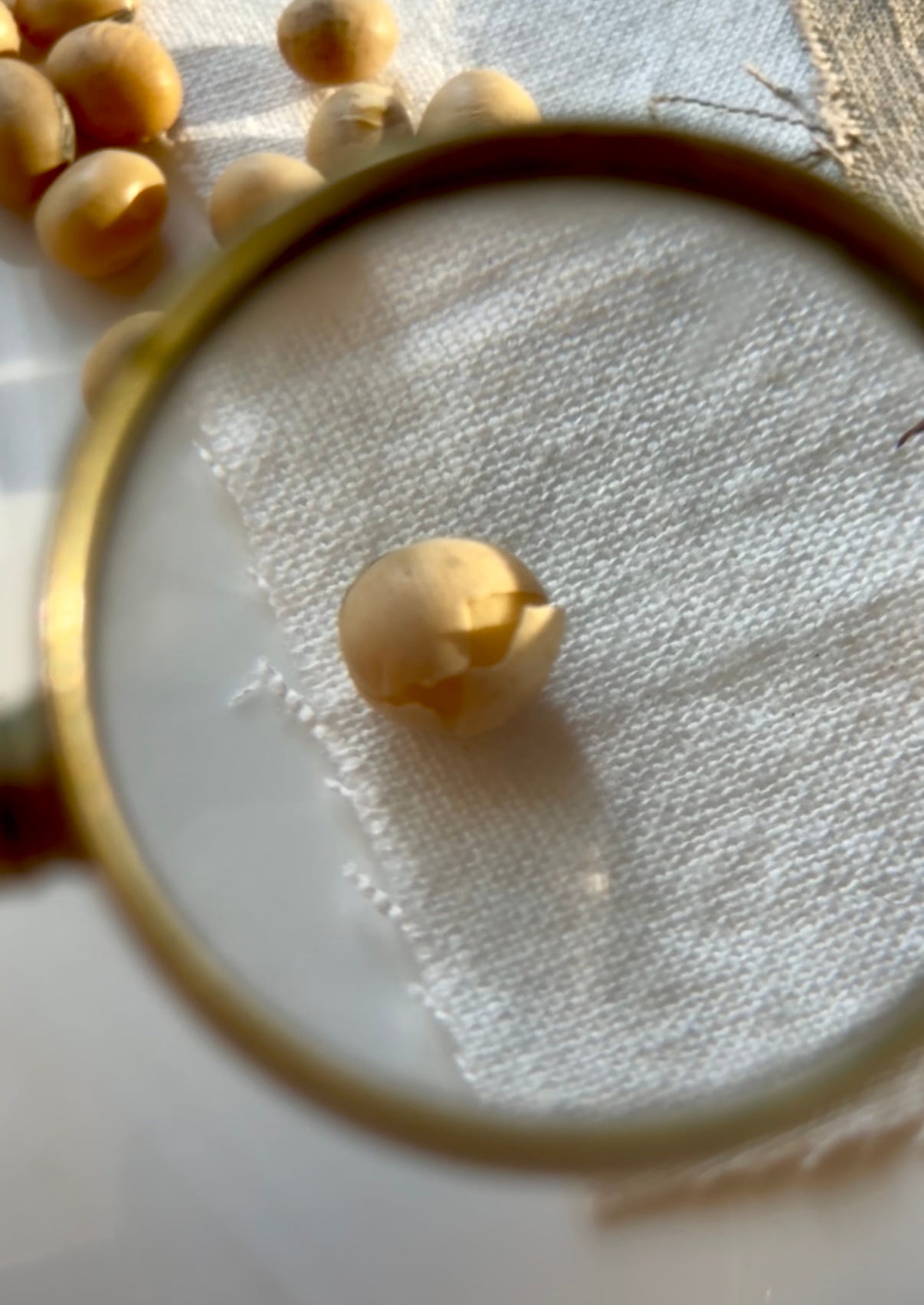
Welcome to the chapter II of this instalment. You will find the first chapter here.
The Gestalt of the Bean chapter II 🫘 ⚙️ will take you to the next elucidation around soy. The question of its charge, the timing around the milk bath pre-dye and how it affects the intake of dye molecules on cellulosic fibers.
The aperture opens up
🥁 A brand new method, presenting : “the Soy-Dye Express”, a method to take you to a direct fusion of soy milk and dye bath to plan your dye session on the same day and make it to the finish line in one fell swoop.
The goal: to take an already sewn garment—with its challenging folds and pleats— and dye it in a straight line from soy milk to dye pot in a continuous manner without delay in the same day — [or two] — with homogeneous results and full brilliance and saturation for a lasting effect
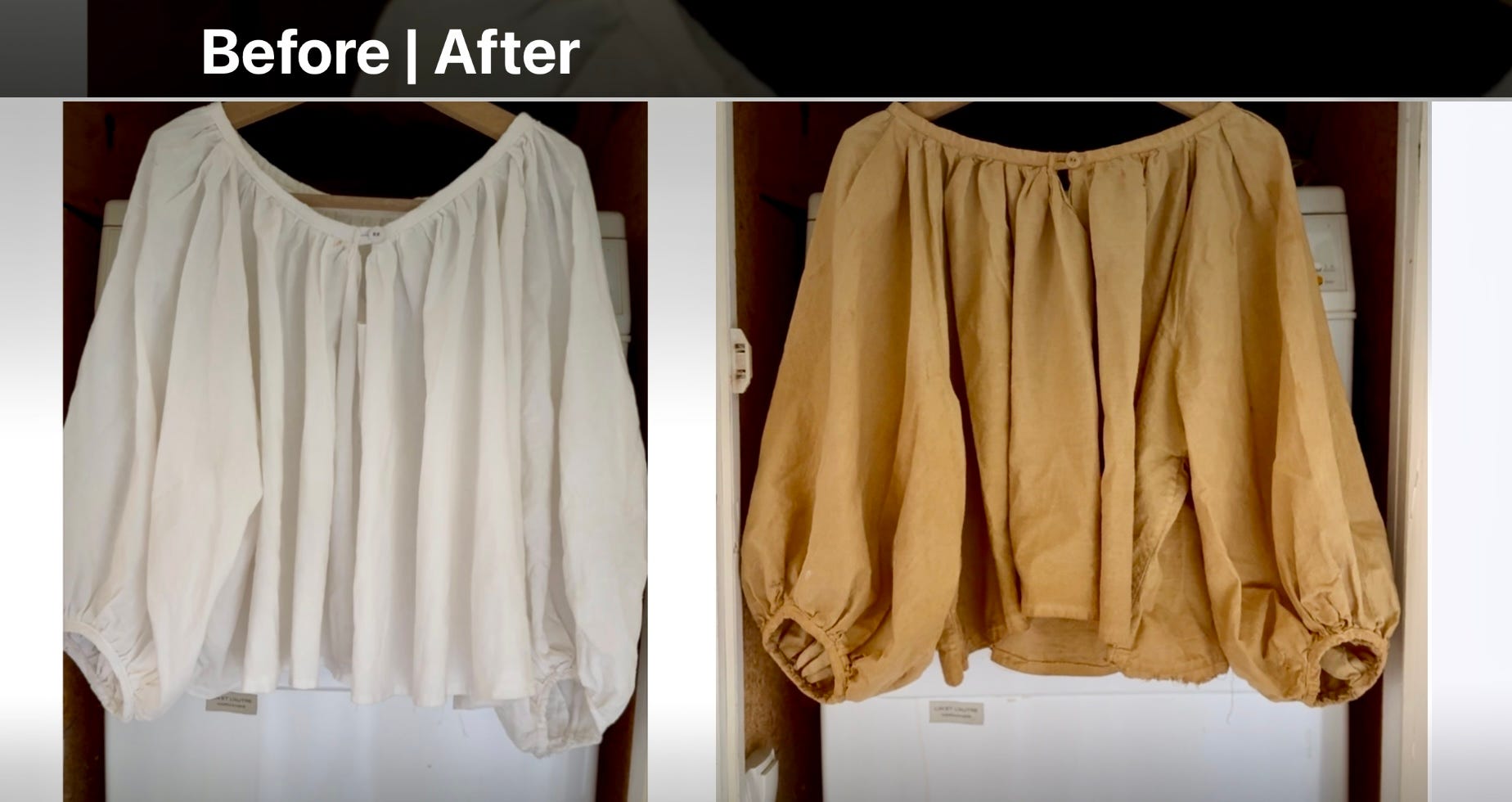
This course will explore :
Express method : the unfailing soy-glue-dye recipe we needed
Bean Theory: the meaning of the charge for dyeing purposes
The science behind: curing, cross binding and the polymers
Microscopic imagery: solidago, bean and fibers
Troubleshooting : how to undo a soymilk coat, correcting a dye gone wrong → the migration of the dye
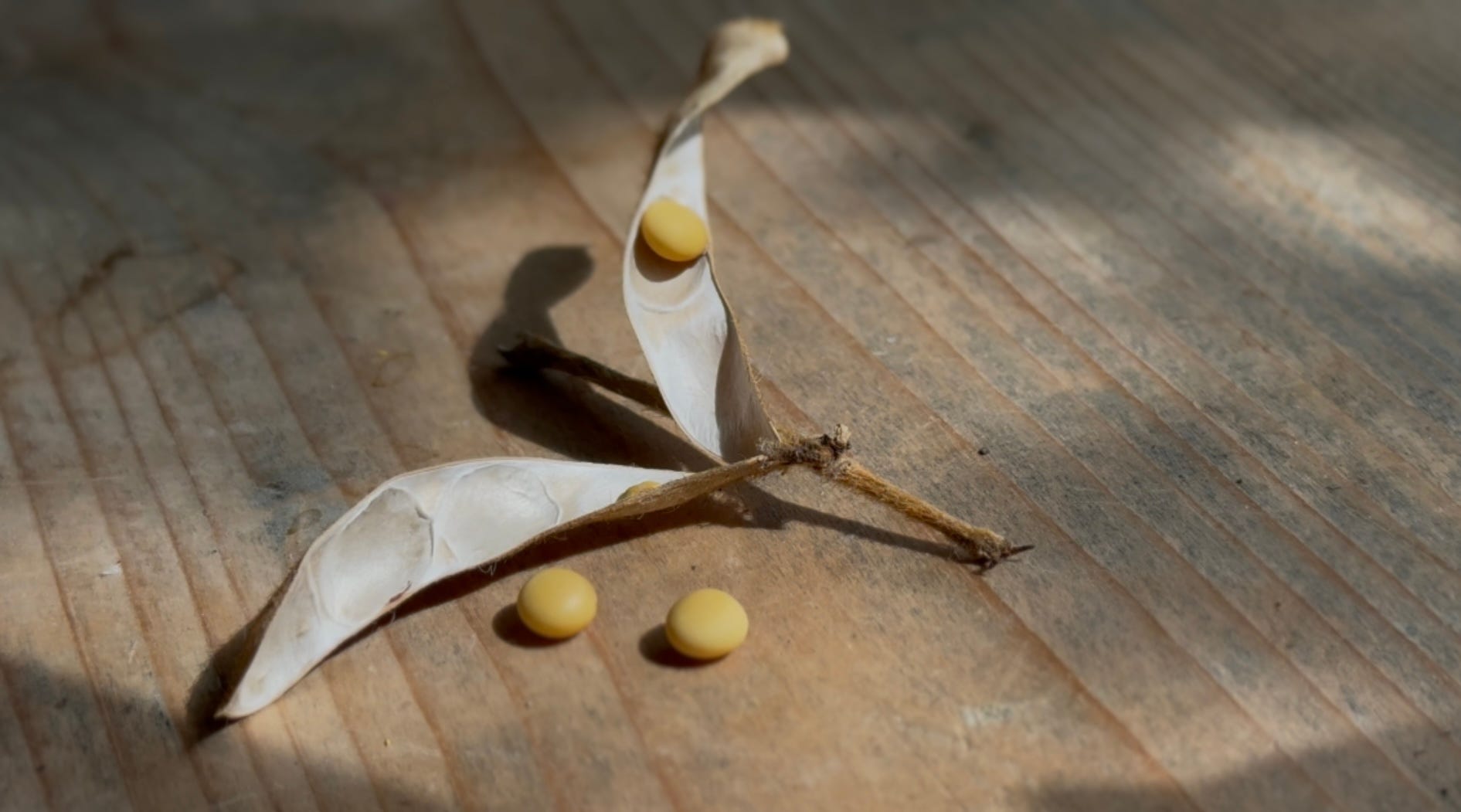
Bonus : Binder versus mordant
And why the term adhesive is more appropriate to understand the role of soy proteins in the dye process → find a comparison study at the end of this course.
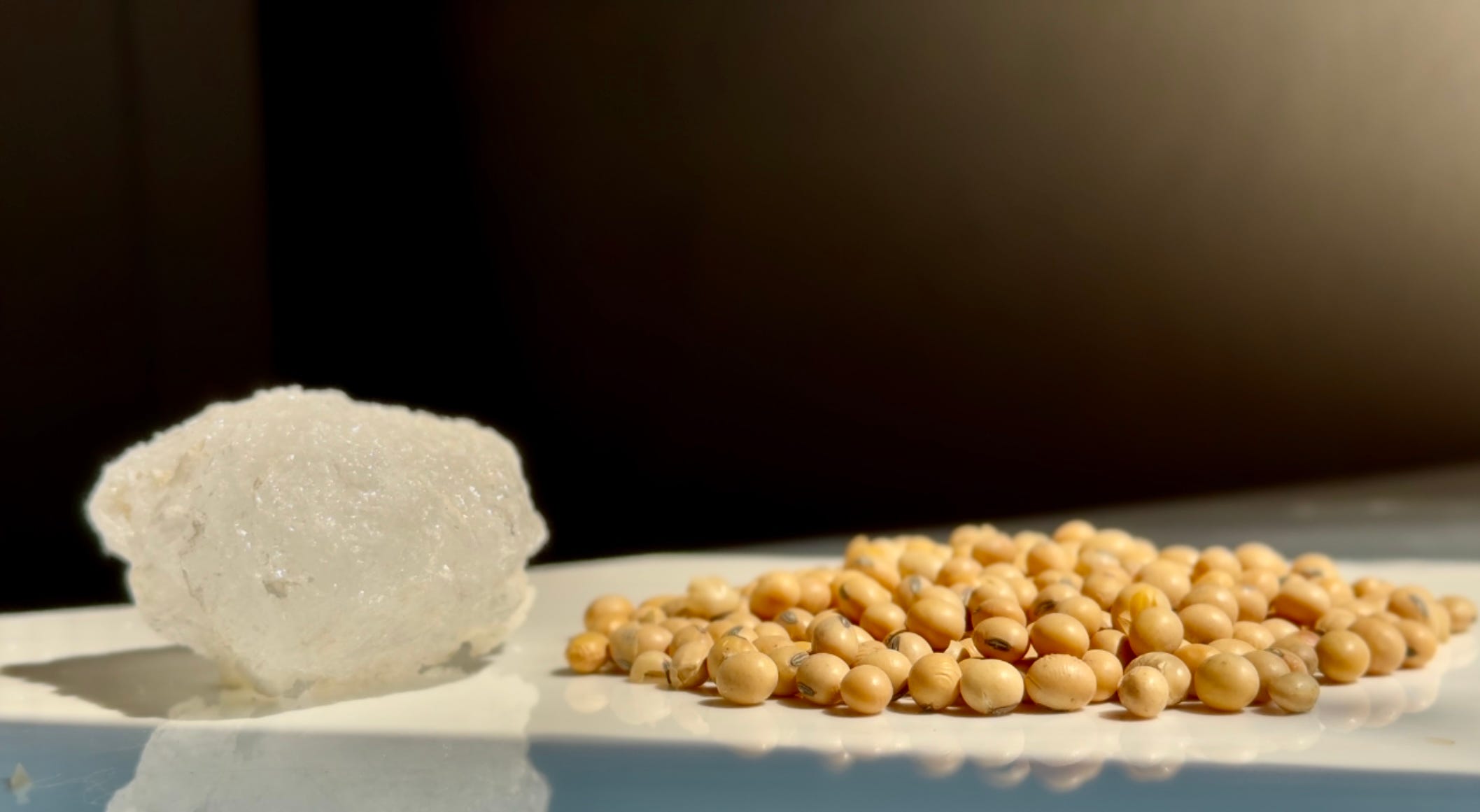
Foreword
I stopped using Alum for mordanting fibers as soon as I read the book from John Marshall “Salvation through Soy”. We are in debt of his incredible contribution for bringing this ancient knowledge to the dye world.
Aluminium is the most abundant metal in the Earth’s crust. Isn’t it strange we don’t need it for our body tho ?
Because, we do need iron, as well as many other metals BUT..no aluminium. Therefore we do not metabolise it. When we absorb it, it is stored mostly in the bones and the lungs. As it is an ion, toxins and parasites are prone to stick to it. So, personally I stir away from it.
We are porous beings, we absorb everything..
If you can’t eat it, don’t put it on your skin
The mining is the other aspect of the ethical problematic around the use of alum. Furthermore, it isn’t found in its pure state, leading to a heavy transformation in laboratory before the dyers can purchase it for themselves.
Soy is a little better, but not on the agronomical side. It still raise ethical questions as well with the over-production. That’s one of the widest cultivated crops on Earth. Mono culture is endangering diversity among many other environmental reasons.
Fortunately, it is edible — and deliciously so. When cooked this is an excellent source of protein for our body as well as when we put it on our skin. So on the healthy side it’s a green light.
So what to choose ?
Like many things in life, we arbitrate our choices with the benefit-risk ratio. I decided that growing soy myself, in my garden, and being able to eat it and transform it for my needs fit this balance. I don’t put my health at risk and stay as close as possible to the virtuous cycle of the natural dyer, meaning a short supply chain with an ethical oversight → an holistic local sourcing model → you mesh with the land..

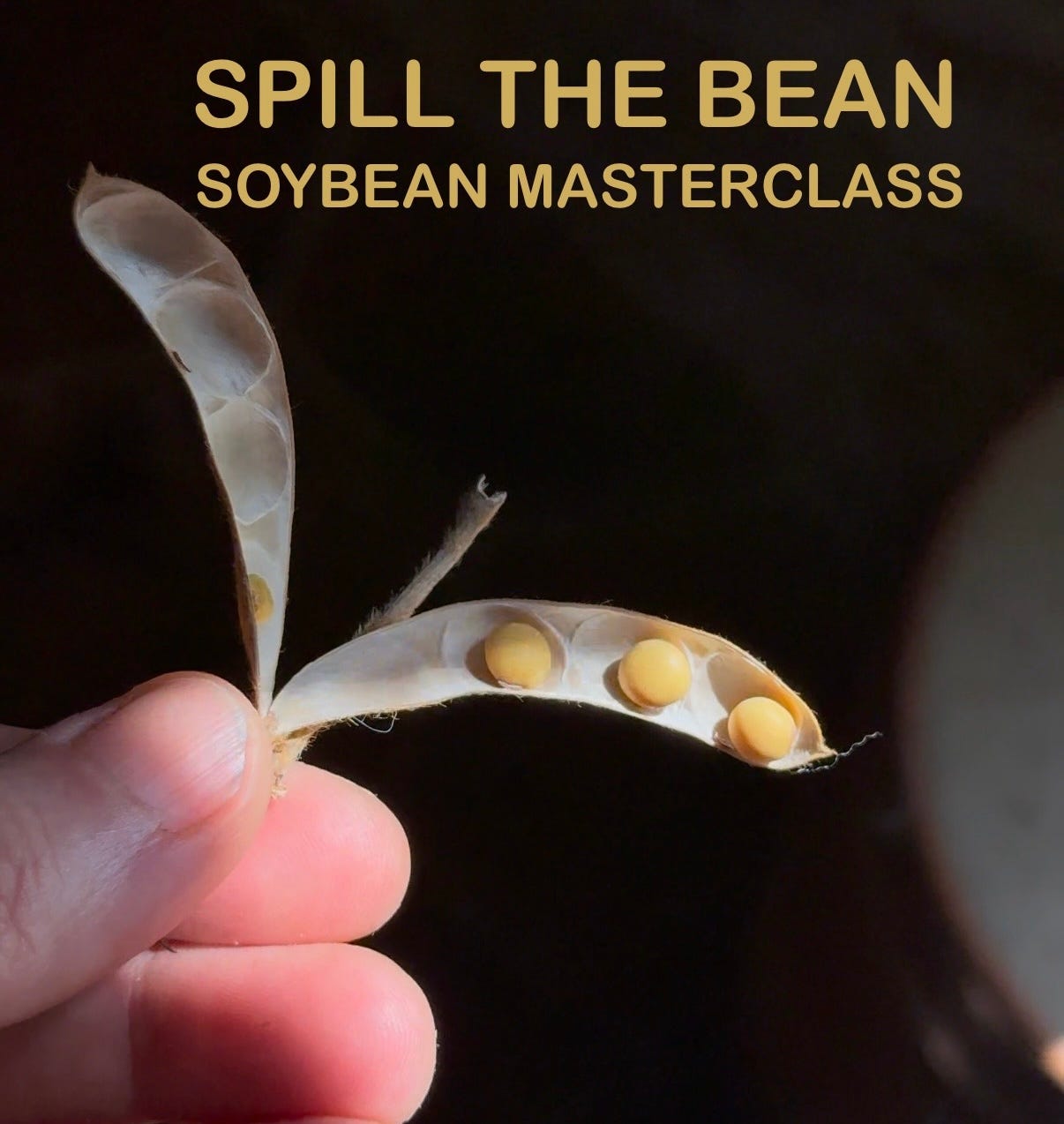
SPILL THE BEAN:
SOY MASTERCLASS
a 180° around the mighty bean
→ EAT - DYE - GROW
🔘 EAT: Tofu Indigo recipe, the Gestalt of the Bean, the science behind
🔘 DYE : Hacks to make it work every-single-time, the Phytic acid plot-twist, reactivate old soy milk treated fabric to work again
🔘 GROW : Sowing, harvesting, best gardener practice
Soy bean Masterclass #2

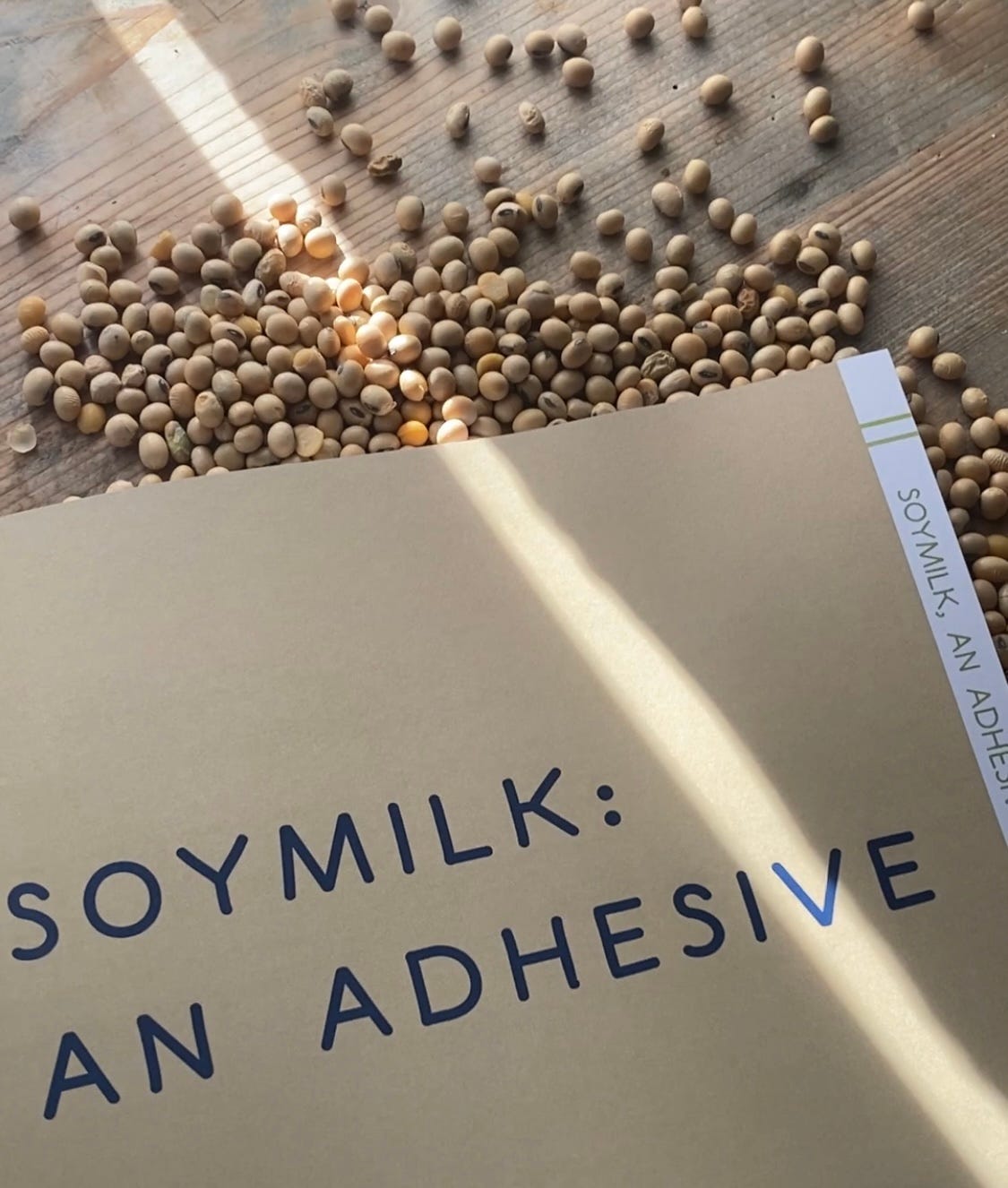
This is a complementary course to my book INSIDE INDIGO. The whole chapter : SOY, An ADHESIVE (p.32) will be referenced throughout this course.
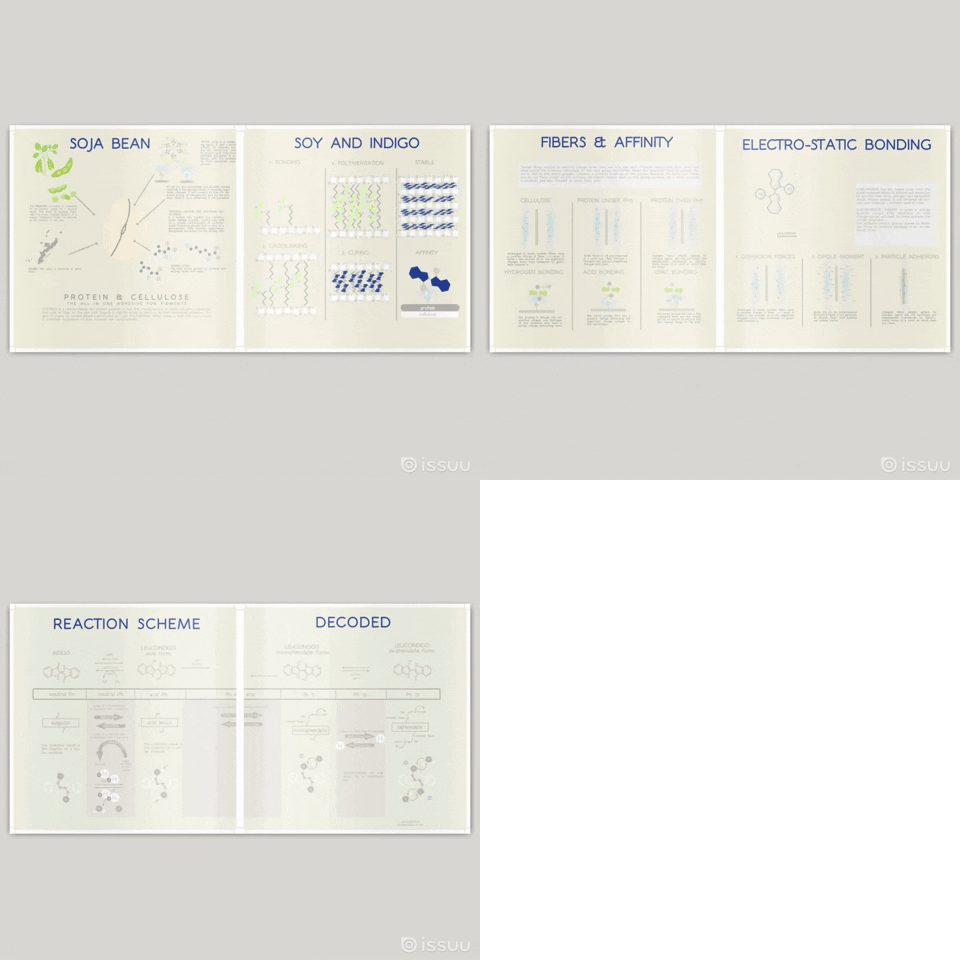
📋You are reading Indigo Crash Course, complementary lessons of 📘INSIDE INDIGO 💙, if you don’t have it yet, get the full experience by finding it :
Where to purchase INSIDE INDIGO:
🔘 DYE
New recipe:
the SOY-DYE EXPRESS METHOD
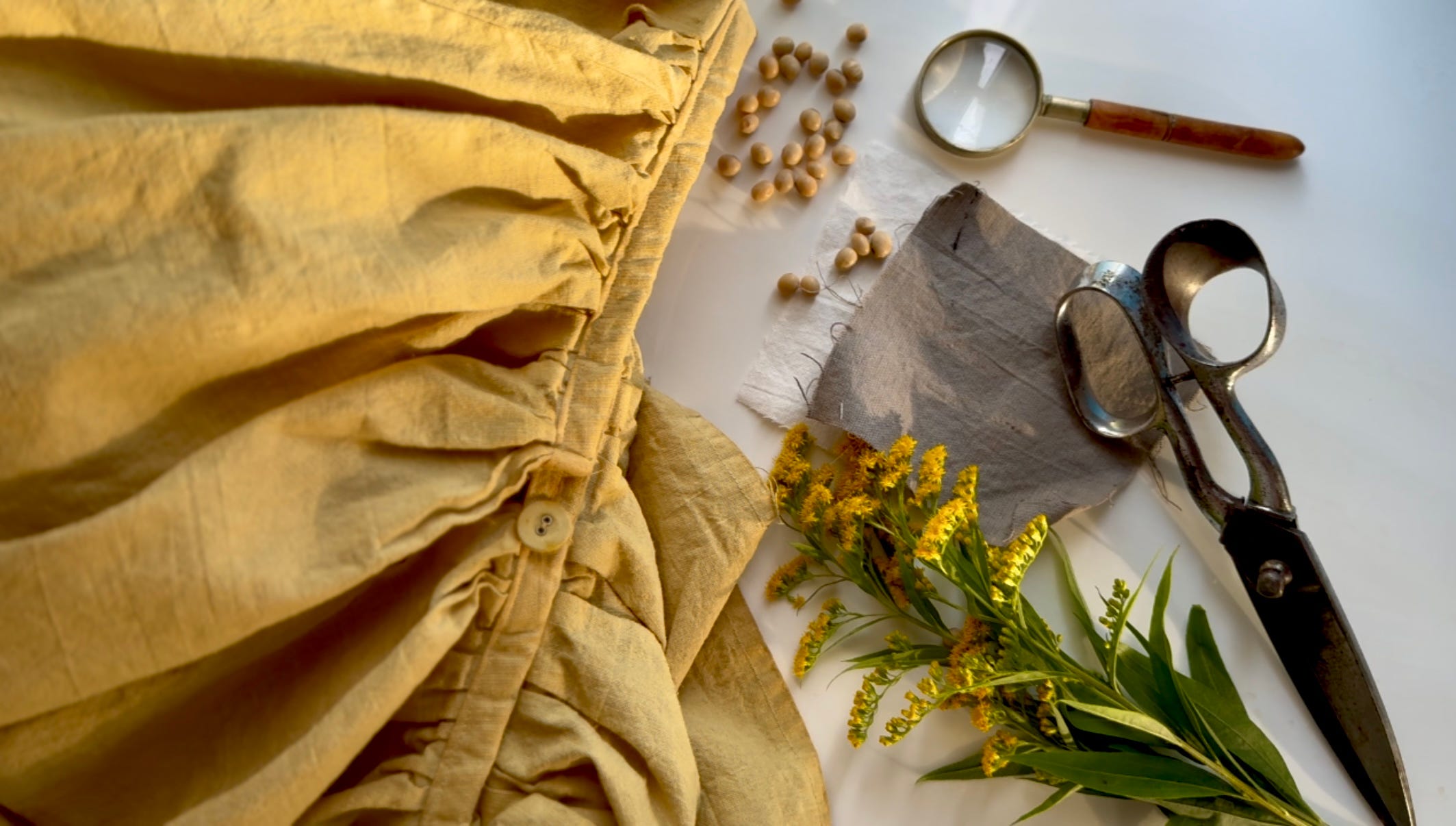
The goal of this express method :
Using soy-milk as a binder has raised controversies in the “when is it ready?” department for a long while.
On the other end of the spectrum, Alum is a long standing popular colour locker for the dye world — and for good reasons. It secure vibrant colours, it is quick to make and the colours lasts. What about soy-milk ? It is time to flip the script and restore its long overdue popularity — not only as a colour locker but as an after-care agent. Binder or Mordant, what’s the best ? This is a moot point, Soy is so much more than a binder, this is an adhesive, a glue that stick to your fibers and your dye molecules, you just need to know how to wield it ..
Without further ado, let’s unpack Soy milk :
With or without hull, ..that is the question
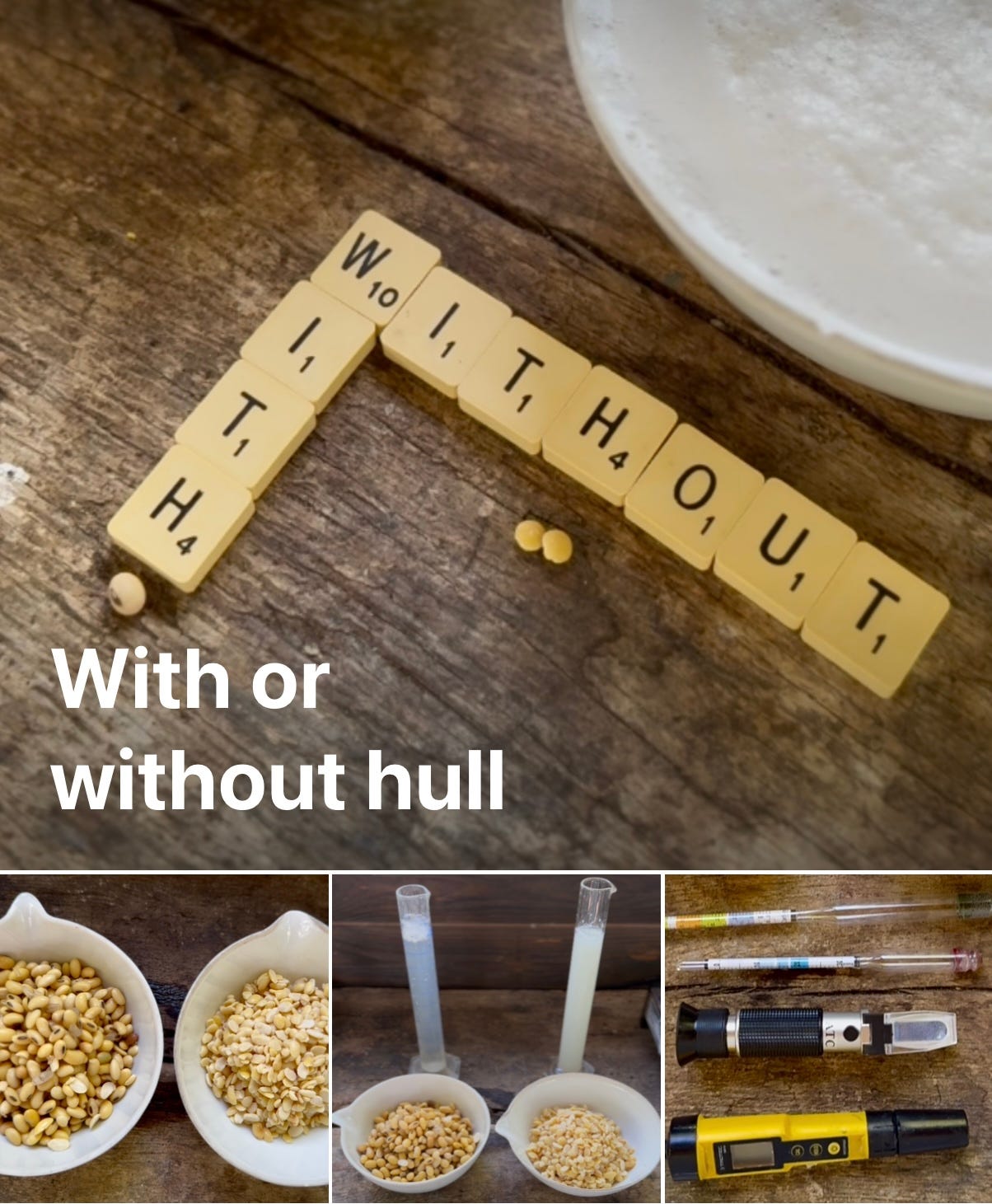
Let’s do an experiment to clear the air around the hull of your bean.
The hull is where the Phytic Acid resides. This molecule is a chelating agent.
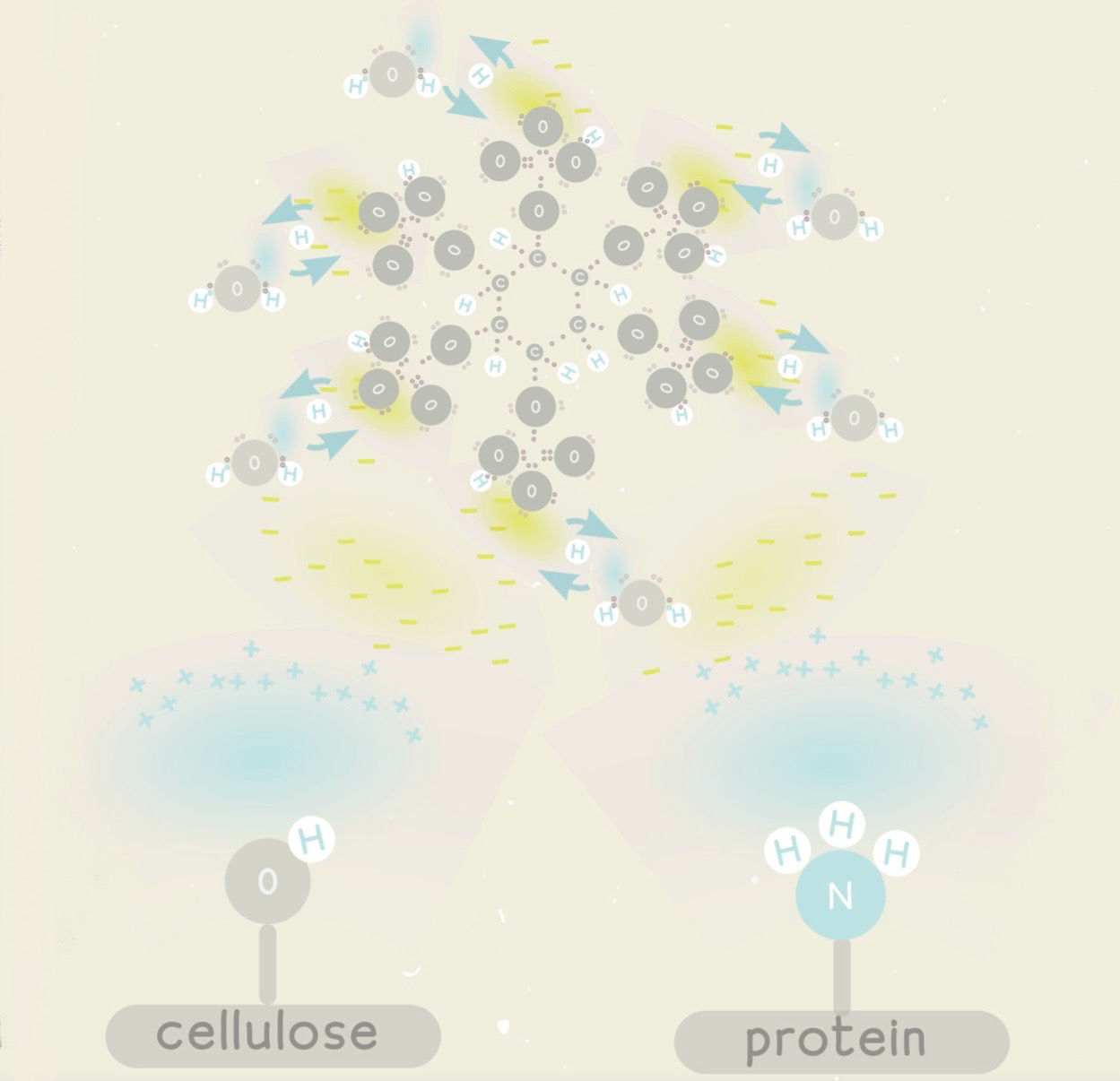
Depending the pH, its charge change as well, and will attract your dye molecules on your fibers even more. It matters to keep your soaking water, and here is why :
The paraphernalia of this experiment
A Brix Refractometer : to measure the sugar content of my soy milk after the 24 hour mark of soaking time
A Brine Densimeter : to measure the salt content of my soy milk after the 24 hour mark of soaking time
A Hydrometer : to measure the alcohol content of my soy milk after the 24 hour mark of soaking time
A pH meter : to measure the pH, in other words — the amount of hydronium ions of my soy milk after the 24 hour mark of soaking time
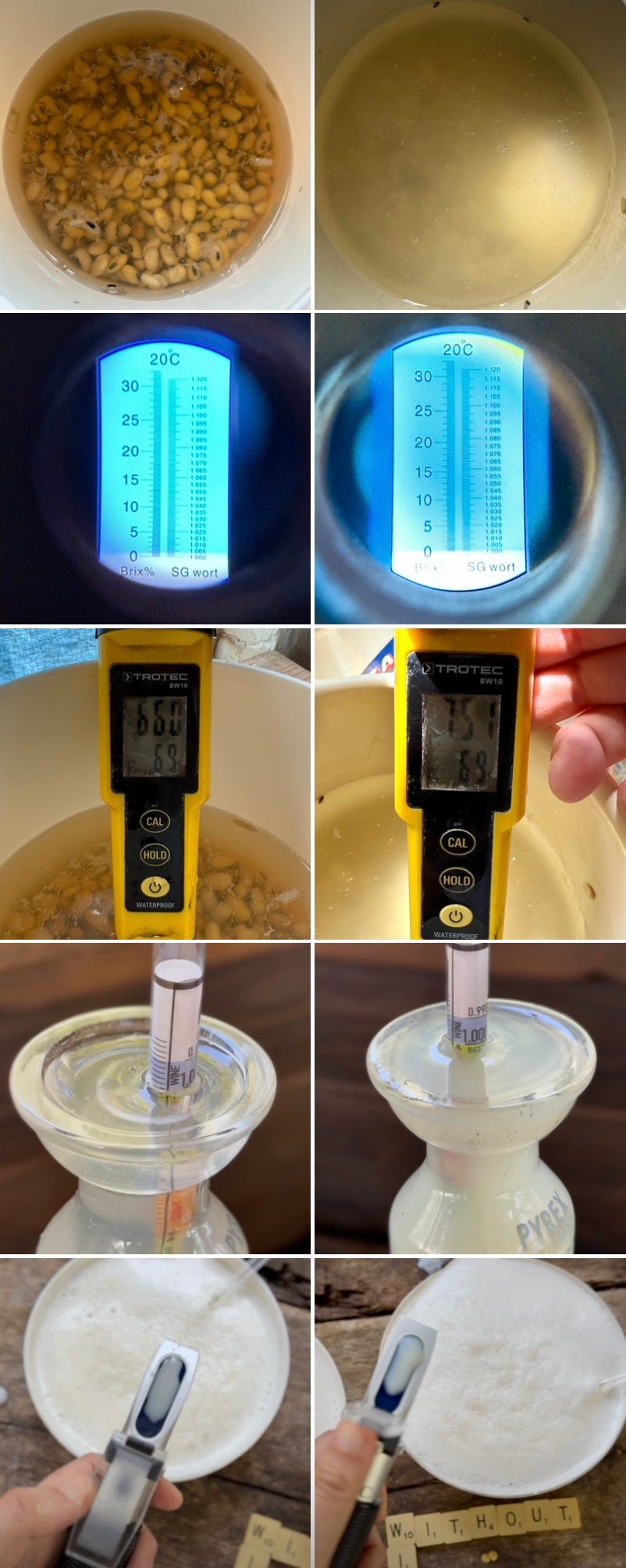
Nomenclature:
WH (with Hull) WOH (without Hull)
BRIX (°Bx) : WH 1.005 | WOH 0
DENSIMETER (1.000 - 1.250 g/ml) : WH 0 | WOH 1,015
HYDROMETER (ABV(%)) : WH 0 | WOH 0,1
pH meter : WH 6.60 | WOH 7.52
So what does it means ?
The presence of the Phytic acid makes a difference in the pH of your milk. It makes it more stable, it keeps the lactobacillus at bay and the microbes or yiest as well (no fermentation of the sugar into alcohol). There is indeed sugar, but the properties provided by the Phytic acids makes it antibacterial and help for the integrity of your milk to not ferment so swiftly.. it’s a conservation agent as well as a chelating one..
You will notice your dye milk will not stink as fast as the conventional method in warmer temperature. And overall the intake of dye is superior.
What means Chelating exactly ?
In Greek, Chelate, means Claws : it literally entrap dye molecules in its embrace. So it’s a mix of a mechanical property combined to ionic bonds. A perfect combo →
🧲 ➕🦀 🟰🔒
So yeah, with or without ? I’ll take the version with, it makes for a very durable and chemically satisfying solution
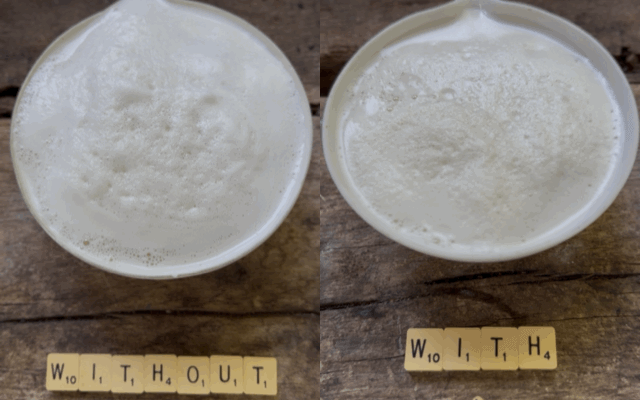
Making beautiful black : The Phytic Acid, as a chelating agent will entrap metallic salts particularly well, such as iron for example. It will shift the flavonoids molecules as well as the Phytic ions to a dark rich black
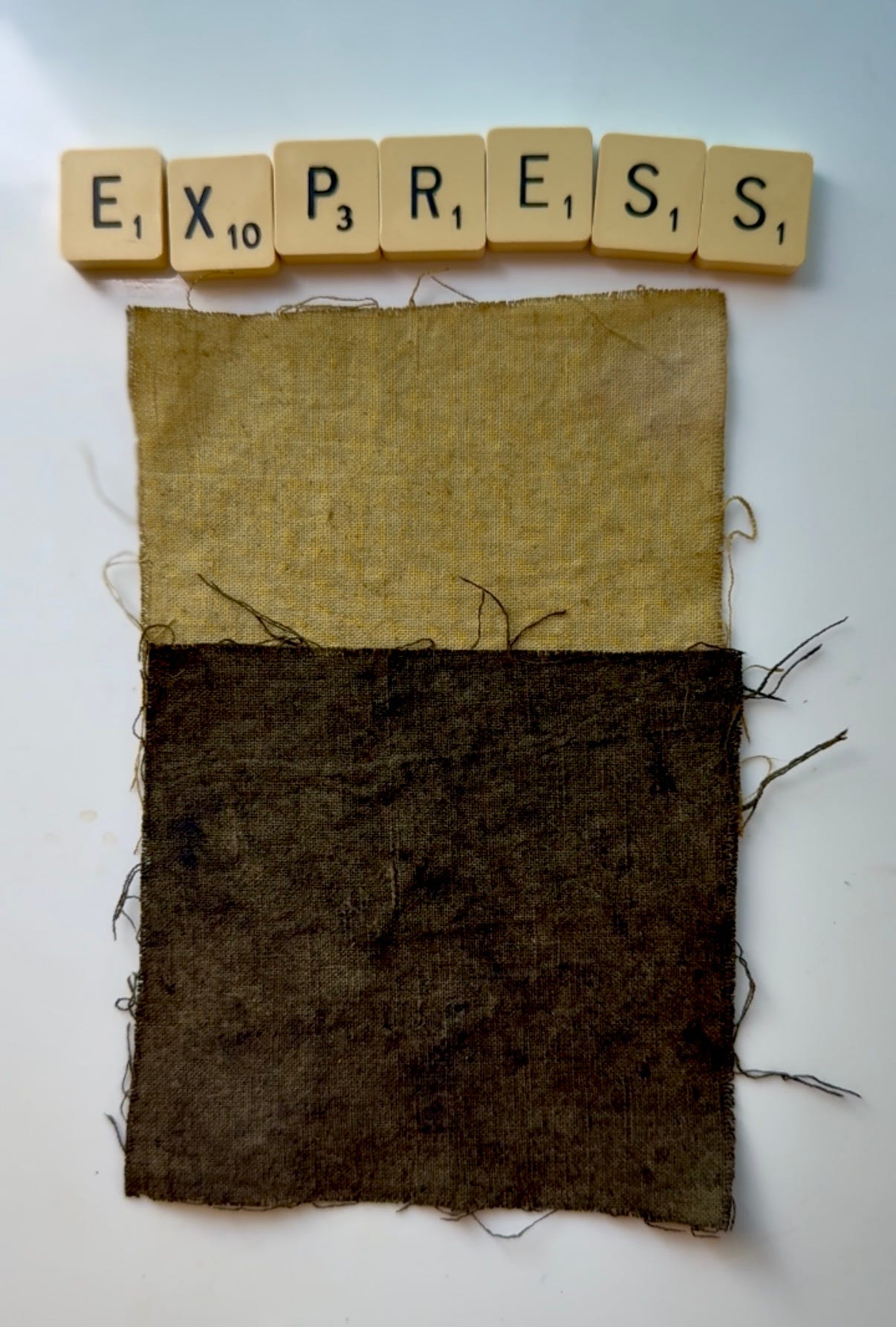
Modifier friendly: So when you wish to sadden your textile, the iron binds to Phytic acid, they form an Insoluble precipitate on the fiber to form insoluble compounds.
→ comparative study and microscopic imagery at the end of this article
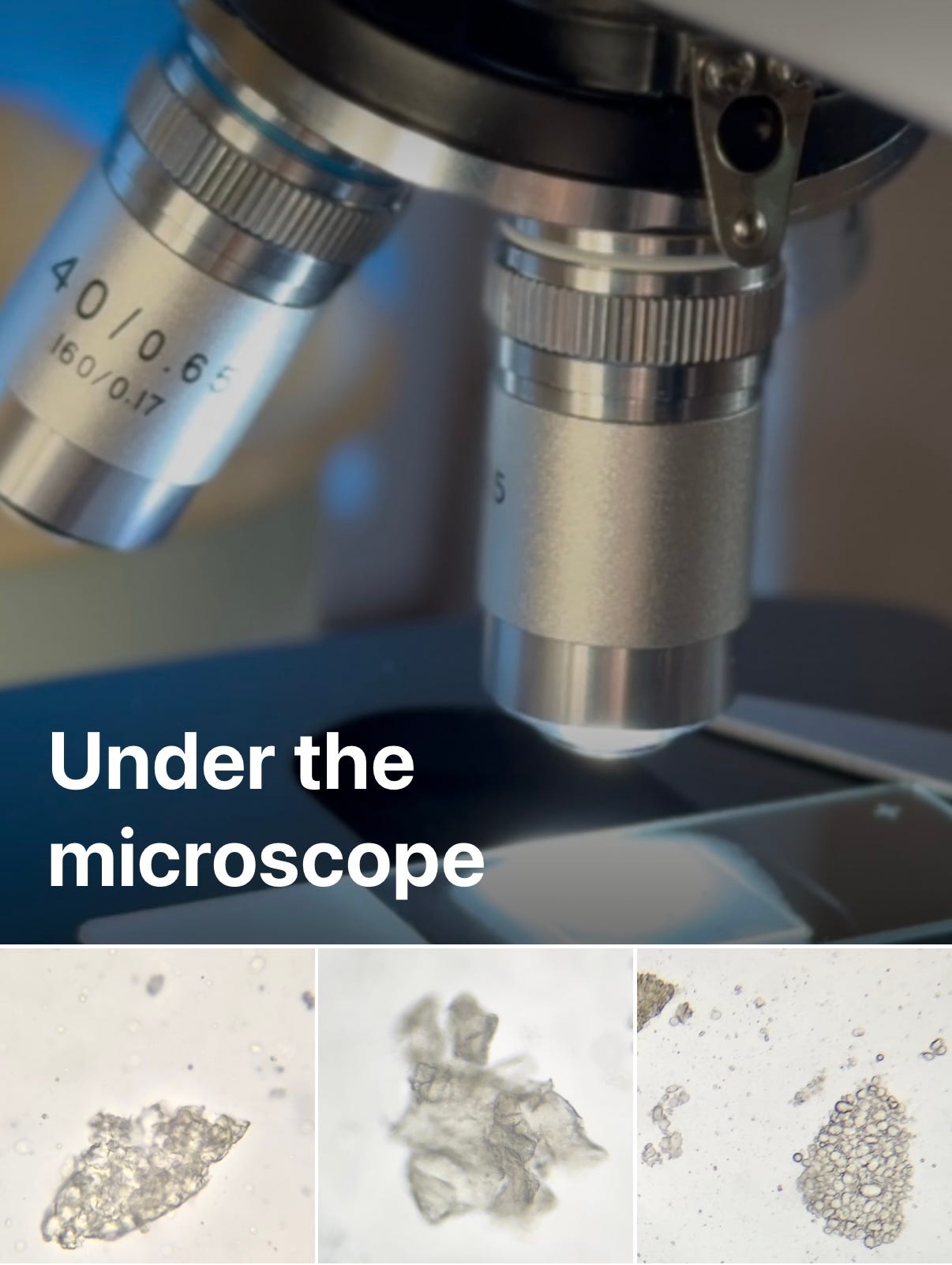
Alright let’s dye our garment :